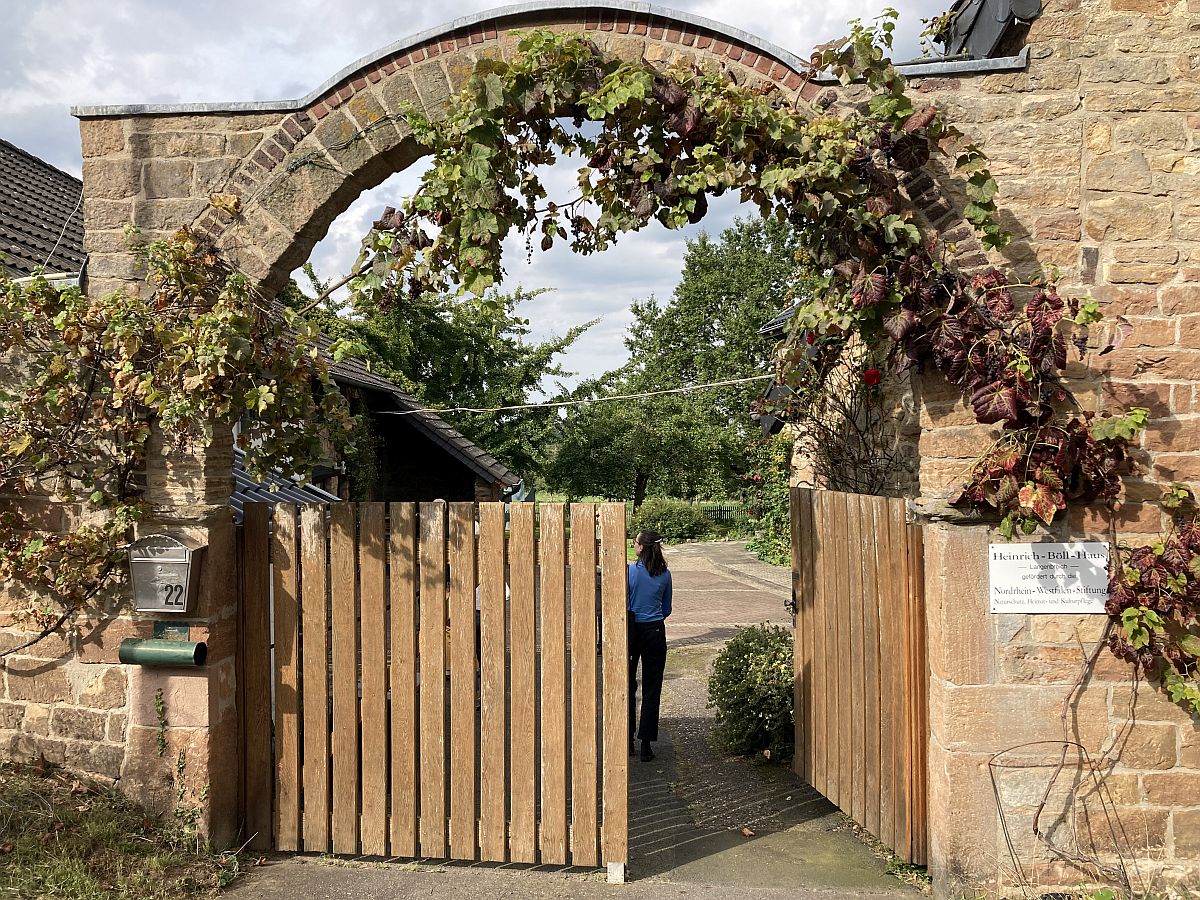
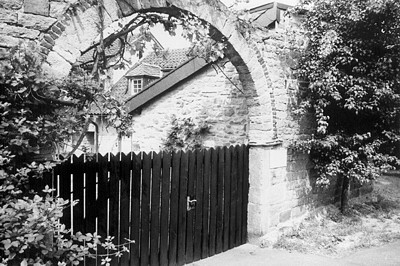
In the late 1950s, Heinrich Böll deliberately moved to the Eifel region. The house in Langenbroich became a place of retreat, reflection, and intense conversations away from the literary scene.
Today, the house is part of an international fellowship program. It offers writers from crisis regions protection, time, and space to work—very much in the spirit of Böll.
Böll once said that in the Eifel one could “see more clearly”—far from public pressure and expectations.
More about the history of this place
The Heinrich Böll House in Langenbroich is more than a former residence. It represents a conscious choice: retreat not as escape, but as a prerequisite for clear thinking and responsible writing.
In the seclusion of the Northern Eifel, key texts were written here by an author who never regarded literature as an end in itself. Böll wrote about power, morality, and social responsibility—and lived this attitude beyond the desk. The house became a place of intense conversations, open thought, and quiet concentration.
Today, the building carries this idea forward in a tangible way. As a place of residence and work for persecuted writers, it protects what mattered most to Böll: freedom of expression.
The house connects past and present—and makes visible that literature can have impact when it takes a stand.